
Roulette rituals are worth taking seriously as culture and not at all as method. The wheel has no memory, every spin is an independent draw, and the reason that is so hard to feel is itself interesting.
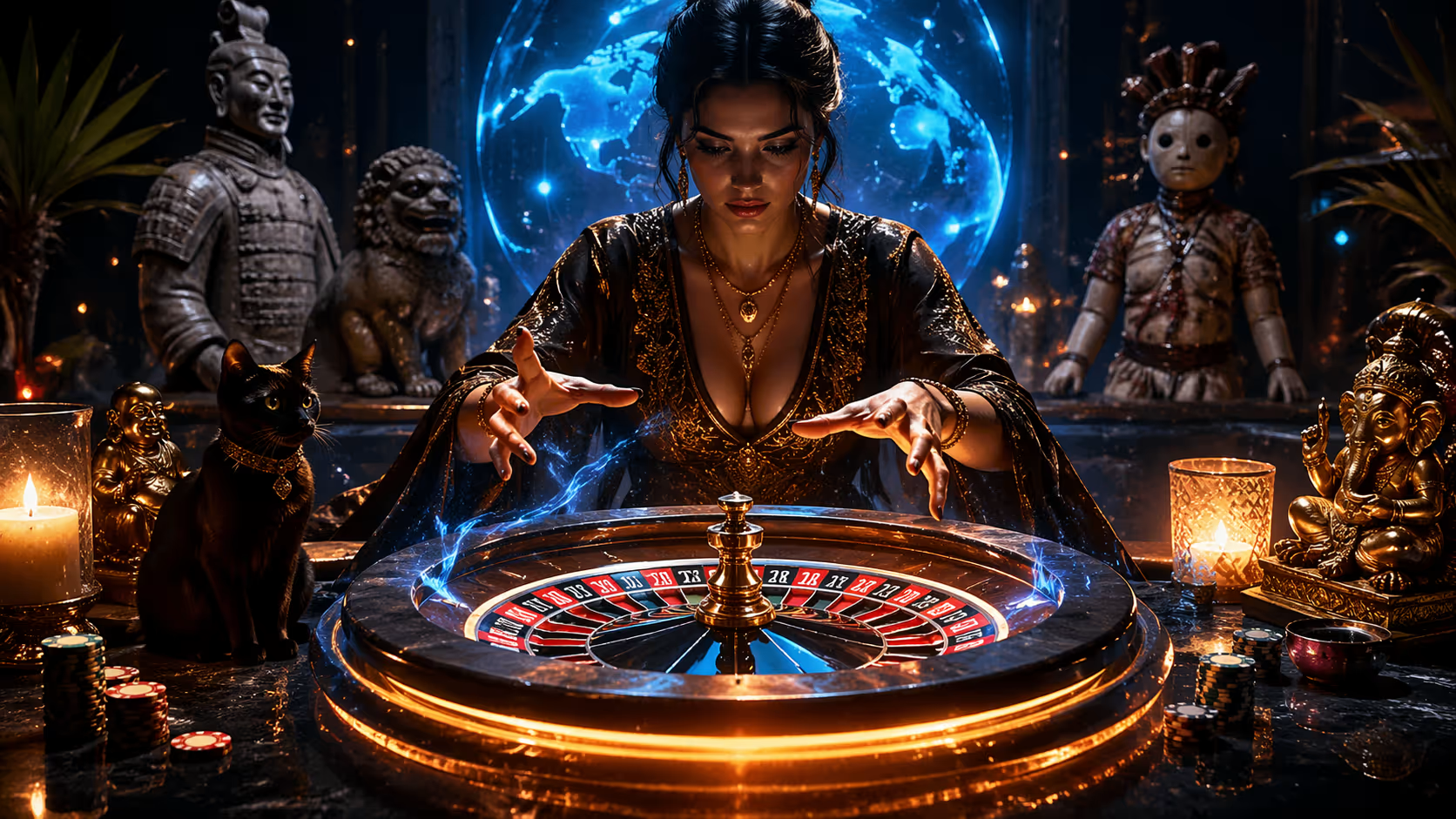
The arithmetic the rituals are fighting
European roulette has 37 pockets and pays 35 to 1 on a single number. That gap — 36 outcomes paid against 37 possible — is the house edge, about 2.7 per cent on every bet, red or black included. The American wheel adds a second zero and doubles it.
Because the edge is in the payout rather than the draw, no pattern of bets escapes it. Covering more numbers lowers variance and leaves the expected loss per unit staked exactly where it was.
| Bet | Pays | Chance on a single-zero wheel | House edge |
|---|---|---|---|
| Single number | 35:1 | 1 in 37 | 2.7 % |
| Split (two numbers) | 17:1 | 2 in 37 | 2.7 % |
| Dozen | 2:1 | 12 in 37 | 2.7 % |
| Red / black | 1:1 | 18 in 37 | 2.7 % |
| Any of the above, double-zero wheel | Same | One worse in 38 | 5.26 % |
Why independence is so hard to believe
Humans read sequences as patterns, so eight reds in a row feels like information. It is not: the ninth spin is still 18 in 37. Expecting a correction is the gambler’s fallacy, and expecting the streak to continue is the same error wearing the opposite coat.
Rituals attach to this gap. A lucky number, a chosen seat, a sequence of taps — each gets confirmed often enough by ordinary chance to survive, and none of them touches the distribution.
The rituals themselves, as culture
They are genuinely varied and genuinely interesting: colours considered auspicious in one tradition, numbers avoided in another, small gestures before a bet that resemble pre-performance routines in sport. Treated as custom, they cost nothing and add atmosphere.
The moment one of them justifies a bigger bet, it stops being culture and becomes a pricing error. That is the only line worth drawing, and it is the same line for a lucky shirt and a mathematical «system».
Practical version: pick the single-zero wheel when both are offered, decide the stake from the budget rather than from the last result, and keep the ritual if you enjoy it — just never let it set the stake.
Frequently asked questions
Do hot or cold numbers exist?
Only in hindsight. Each spin is independent, so a number appearing often says nothing about the next spin on a wheel in working order.
Is there a bet with a lower edge?
On a single-zero wheel every bet carries the same 2.7 per cent, apart from specific rules such as «la partage» on even-money bets where they apply. Choosing the wheel matters; choosing the bet does not.
Can a betting system beat roulette?
No. Progressions redistribute wins and losses and leave the expected value unchanged, while raising the risk of a large single loss.
Why do rituals feel like they work?
Because unpredictable reward schedules confirm them often enough by chance. The belief is maintained by coincidence, not by effect.
Background: roulette odds and the gambler’s fallacy.
Related reading: a game where decisions do matter, reading people instead of patterns, belief dressed as a model and who chooses the wheel you are offered.